
Portland's Title 11 Tree Code: What Homeowners Need to Know Before Removing a Tree
Portland's Title 11 tree code decides whether you need a permit before removing a tree. Here is a plain-language look at size thresholds, street trees, permit types, emergencies, and replanting.

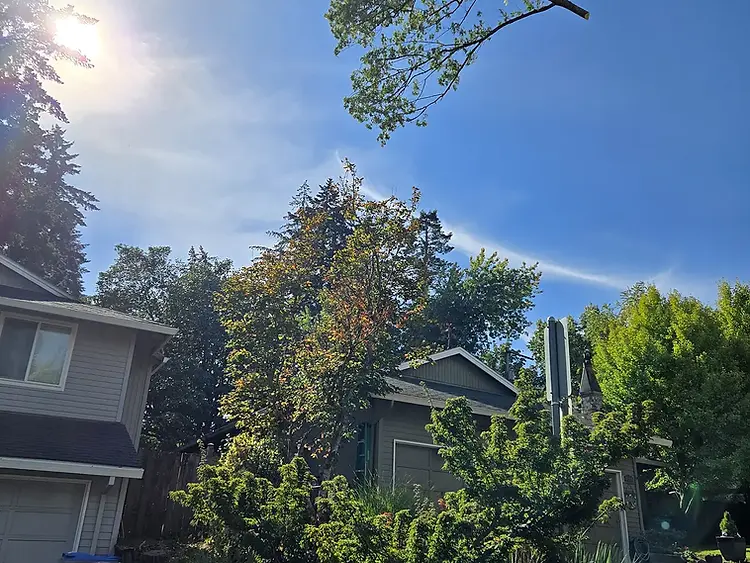

Under Portland City Code Title 11, private trees 12 inches in diameter at breast height (DBH) or larger generally need a permit to remove, and every street tree needs a permit regardless of size. Permits come from Portland Urban Forestry, and replanting is often required. Confirm current rules with the city before work. North Woods Tree Service can help you identify what your job needs.
- Title 11 is Portland's tree code, and Portland Urban Forestry administers tree permits.
- Private trees 12 inches DBH and larger generally need a permit to remove; street trees always do.
- Portland uses different permit types for simpler removals and for removals that need more review, often referred to as Type A and Type B.
- Dead, dying, and dangerous trees still go through a process, usually with documentation of the tree's condition.
- In a true emergency, make the site safe, document everything, and follow up with the city promptly.
- The property owner submits the permit. North Woods helps you identify what is required and can assist with the city if needed.
What is Portland's Title 11 tree code?
Title 11 is the section of Portland City Code that governs trees on both public and private property. It covers when trees can be removed, how they must be protected during development, and when replacement planting is required. Portland Urban Forestry, part of Portland Parks and Recreation, is the office that reviews tree permits and answers questions about the code.
The goal of Title 11 is to protect the city's tree canopy, which shades streets, manages stormwater during our long wet winters, and supports wildlife. In practice, it means that many Portland homeowners need city approval before taking down a tree, even one in their own backyard.
This post gives a general, plain-language overview. Codes change, and the details of your situation matter, so always confirm current requirements with Portland Urban Forestry before scheduling work. If you live outside Portland, our city-by-city tree permit guide explains how neighboring cities compare.
Which trees need a permit under Title 11?
Two categories of trees are regulated in most situations: private trees 12 inches DBH or larger, and all street trees. DBH means diameter at breast height, measured about 4.5 feet above the ground.
Private trees are trees on your lot outside the public right-of-way. Under Title 11, Portland generally requires a permit to remove a private tree that measures 12 inches DBH or more. A mature Douglas fir, western red cedar, or bigleaf maple in a Portland backyard will almost always be over that size. Smaller private trees are often exempt, though other rules, like environmental overlay zones, can still apply.
Street trees are trees in the planting strip between the sidewalk and the curb, or elsewhere in the public right-of-way. Portland requires a permit to remove any street tree, no matter its size or condition. Many cities treat street trees as public assets even though the adjacent homeowner is responsible for their care, and Portland is no exception. Significant pruning of street trees can also require a permit.
If you are unsure whether a tree is on your lot or in the right-of-way, ask before cutting. Property lines are not always where they appear to be.
What is the difference between Type A and Type B tree permits?
In general terms, Portland uses a simpler permit track for straightforward removals and a more involved track for removals that call for closer review. Homeowners often hear these described as Type A and Type B permits.
A simpler permit typically applies to situations the code treats as routine, such as removing a dead, dying, or dangerous tree, or removing a smaller regulated tree. Review tends to be quicker, and the city may ask for photos or an arborist's assessment.
A more involved permit generally applies to larger healthy trees or situations the code flags for added review. These can take longer, may include public notice, and can come with more significant replanting or mitigation conditions. Because the exact criteria and categories are set by the city and can change, ask Portland Urban Forestry which permit type fits your tree before you plan a timeline.
One practical tip: start the conversation early. If you are planning a remodel, addition, or new driveway, tree permits can affect your construction schedule, and development projects have their own Title 11 tree protection requirements.
How does Title 11 treat dead, dying, or dangerous trees?
Dead, dying, and dangerous trees are generally handled through a faster path, but you usually still need a permit. The city wants documentation that the tree's condition justifies removal.
That documentation is where an arborist helps. Our ISA Certified Arborist can assess the tree and note what we see: fungal conks from root rot, cracked or hollow trunks, root plate movement, or extensive dieback. In Portland, we often see laminated root rot in Douglas fir, cavities and decay in older bigleaf maples, and storm damage after east wind events and ice storms. Our post on warning signs a tree is becoming dangerous covers what we look for.
If a tree is declining but not yet failing, the right answer is not always removal. Proper ISA-standard pruning under ANSI A300 can sometimes reduce risk and extend a tree's life. Our tree trimming and pruning team can help you weigh the options. We never top trees, since topping creates weak regrowth and decay.
What should you do in a tree emergency in Portland?
If a tree has fallen or is actively failing and threatens people, a home, or power lines, make the area safe first. Keep people away, call 911 if anyone is hurt, and call the utility if lines are involved. Never approach downed power lines.
Portland generally allows emergency work to remove an immediate hazard, but it expects you to follow up afterward. Document everything: take photos of the tree before any work, photos of the damage, and photos after removal. Keep notes about when it happened and what was at risk. Then contact Portland Urban Forestry promptly to complete whatever process the city requires.
North Woods provides emergency tree removal and storm damage cleanup across the Portland metro. We offer fast response, and most emergencies get same-day or next-day dispatch. We can photograph and document the tree's condition as part of the job, which makes your follow-up with the city easier.
Will Portland require you to replant after removing a tree?
Often, yes. Replanting or mitigation is a common condition of Title 11 tree permits, especially for healthy regulated trees and street trees.
The specific requirement depends on the tree's size, the reason for removal, and where it was located. Some permits require planting one or more replacement trees on site. When planting on site is not practical, the city may offer other ways to meet the requirement. Street tree replacements usually must follow the city's approved species list and planting standards, since overhead wires and sidewalk width limit what will thrive.
Read your permit approval carefully. It will spell out what is required and when it needs to be done. Planning for replacement early also lets you choose a better spot and species for the long term, such as a native tree suited to Portland's wet winters and dry summers.
How does North Woods help Portland homeowners with Title 11?
We help you identify what your job requires, and the property owner submits the permit to the city. Portland's permit system is set up that way because the application belongs to the person responsible for the tree.
During your free estimate, we measure DBH, identify the species, note the tree's condition, and look at its location relative to the right-of-way, your home, and any slopes or waterways. We explain which permit path is likely to apply and what Portland Urban Forestry will probably ask for. If the tree is dead, dying, or hazardous, our arborist can document its condition for your application. If the city has questions about the work itself, we can help answer them.
Once you have approval, our crew completes the tree removal, and cleanup such as chipping and hauling is included on most jobs. You can find a quick reference on our tree permit guide and learn more about our work on the Portland tree service and Multnomah County tree service pages.
North Woods Tree Service has worked in the Portland metro since 1986. If you are not sure where your tree stands under Title 11, call (503) 656-5802 or schedule a free estimate, and we will help you sort it out before any work begins.
James Cowell owns and runs North Woods Tree Service, the family business founded by Daryl North in Beavercreek, Oregon in 1986. North Woods handles tree removal, pruning, storm response, land clearing, and logging across Clackamas, Multnomah, and Washington Counties, with an ISA Certified Arborist on staff and 200+ customer reviews across Google, Angi, Facebook, Yelp and Housecall Pro.


